Outside Perspectives
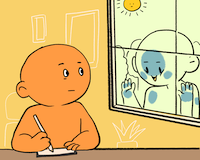
We spend so much time working on our webcomics, so it’s easy to get stuck in our own heads. Getting outside perspective can be a great tool to improve our craft and get unstuck, especially when you find yourself in a webcomic pickle. It’s important to reach out to different types of people depending on where you are in your story and what your feedback goals are, but sometimes it can be hard to figure out who the right person is! Today we’re going to dive into the different types of feedback that can help you out of your pickle jar!
Listen to this episode here:
Listen to this episode on YouTube:
https://youtu.be/0keFc1dmYtU
In this Episode:
- What kinds of people do you reach out to when you’re working on your webcomic, and how have their reactions helped you?
- What’s the difference between asking your friends/family, asking a critique group, asking a beta reader, and asking an editor? What should you expect?
- What is your advice to someone who feels like they want some sort of outside perspective, but they’re not sure who to approach?
----
Episode Release Date: September 30, 2026
Episode Credits:
Miranda Schwemmer - she/her, https://mirandacakes.art
Claire Niebergall (Clam) - she/her, https://www.phantomarine.com
Bob Appavu - any, https://intothesmokecomic.com https://www.demonoftheunderground.com
----
The Intro "DO IT (feat. Shia LaBeouf)", and the Outro "It's Good To See You Again!!", both by Adrianwave, have been used and modified in good faith under the Creative Commons Attribution-Share Alike 3.0 Licensed. Edits include: Fade IN/OUT, and a repeat added to the beginning of "It's Good To See You Again!!". For more information on this creative commons use, please reference https://creativecommons.org/licenses/by-sa/3.
Transcription
This transcript is auto generated by our recording software.
00:00:00.66
Miranda
Hello and welcome to Screen Tones where we talk anything and everything webcomics. Today we're going to be talking about outside perspectives and how they help in making webcomics. I'm Miranda, my pronouns are she, her, and I make the webcomic Into the Swell.
00:00:15.26
Claire
I'm Claire. My pronouns are also she, her. I make the webcomic Phantommarine.
00:00:20.18
Bob
And I'm Bob, I use any pronouns and my webcomics are Into the Smoke and Demon of the Underground.
00:00:26.87
Miranda
We spend so much time working on our webcomics, so it's easy to get stuck in our own heads. Getting outside perspective can be a great tool to improve our craft and get unstuck, especially when you find yourself in a webcomic pickle. It's important to reach out to different types of people depending on where you are in your story and what your feedback goals are.
00:00:47.29
Miranda
But sometimes it can be hard to figure out who the right person is. Today we're going to dive into the different types of feedback that can help you out of your pickle jar. So to start, i want to hear from you guys about what kinds of people do you tend to reach out to when you're working on your webcomic and how have those people helped?
00:01:07.60
Miranda
Let's start with you, Claire.
00:01:09.56
Claire
Sure. Basically I focus on two groups. Readers are always a really good metric for kind of quick reactions to things that I'm doing and saying. Being able to look and see what they're reacting to. What they're not reacting to what they're saying in terms of like following little breadcrumbs or not noticing things or anything like that so it's it's kind of an in the moment reaction feedback sort of thing but it does inform my process as I go along but the biggest one is other webcomic creators. So I'm in a server with a few other members of Screen Tones where we all have our own little channel where we can drop things for feedback or for discussion. And a lot of it is, you know, it's story stuff, it's character designs, it's people saying like, I'm in a really difficult kind of rut with this particular chapter, or I need this specific thing to happen, and I don't know how to get there. So oftentimes, it'll be us basically gathering around this one person and being like, hmm, hmm. yes okay so let's let's look at the problem and see what the problem needs what can be done, kind of the scope of it and oftentimes like we'll be writing things in these channels and talking them out and there's a phrase in various industries called rubber ducking where like you are trying to explain the problem to Basically a rubber duck, like literally sitting on your desk. And in the process of explaining it to the duck, you understand it yourself. Getting out of your own head and kind of breaking it down bit by bit
00:02:58.94
Claire
helps you kind of inadvertently solve it yourself even without actually hearing it from somebody else. But then we will actually kind of bookend that with our own other opinions, even if somebody is like, wait, I totally know what to do now just because I talked about it. So yeah, a lot of times people come in with like, oh, have you tried this? Or I would do it like this. And not everybody will do it the exact same way. So it kind of becomes more of a little symposium of like, here's what several people would do to solve the exact same problem.
00:03:34.87
Claire
either pick one or balance them out or maybe back away and be like, no, no, none of these feel quite like me. So then even hearing those perspectives, you can kind of go back and be like, what do I really want? What do I need? So, it's a combination of more passive feedback by seeing what readers respond to, but then also putting things directly in front of my peers and being like, help me, this is driving me crazy. And then maybe within like a day or two it's like, Eureka! I know what it needs! Thanks guys! So, it's kinda like that.
00:04:12.90
Miranda
I love that. And I love rubber ducking. We say getting out of your head and getting outside perspective, but you can often underestimate how much it helps just saying the things in your head out loud, even if it's just to an inanimate object.
00:04:27.64
Claire
mhm
00:04:30.30
Miranda
It can make such a difference as you're trying to explain something and you're like, oh, that is like, and then you just have the epiphany and it's excellent.
00:04:39.45
Claire
Yeah, because sometimes it's not as complicated as you think, or there's some aspect that you uncover just by putting it into words where you're like, wait, that's the solution.
00:04:40.09
Miranda
Yeah.
00:04:49.78
Claire
I just said the solution. Scribble, scribble, scribble.
00:04:51.35
Miranda
Yes, exactly.
00:04:52.06
Claire
And then you go back to your job and it's great.
00:05:01.24
Claire
Exactly.
00:04:55.02
Miranda
And you just make sure you have the notebook and you have the place to put those epiphanies and solution moments before they disappear again, because we all know that those ideas are fleeting and they will fly away.
00:05:09.30
Claire
They are indeed.
00:05:11.51
Miranda
But what about you, Bob? What kinds of people do you reach out to and how has that feedback helped you?
00:05:21.43
Bob
Well, let's see. I get more feedback from Canada geese than from rubber duckies because, you know, they're just all honking at me and I just go with the flow, but it's all right.
00:05:33.49
Miranda
Valid
00:05:34.78
Bob
so But no, I kind of have a tier system for the type of feedback that I need depending on how in-depth the problem is.
00:05:47.05
Bob
So my, my basic tier is like, let's say you have a page that you're working on that's like right in front of you.
00:05:57.34
Bob
And, you know, it's like an action scene and you're just not sure if it reads, if it makes sense. Can you actually read through the panel lab? That's the kind of thing that pretty much anyone can answer at any moment. I'm also part of several comic discords where I'm able to get feedback from other creators. And so that's the type of thing where I'll just drop it into like the feedback channel in one of those servers and be like, hey, what do you guys think? And it's a quick and easy way to just get you know a one or two line response or just get a temperature on something or get some quick advice on how to make it better. The thing about that type of Discord is that you are surrounded by other
00:06:42.26
Bob
experts, so to speak. So these are people who kind of have high visual literacy. So sometimes I also like to get feedback from people with lower visual literacy, especially if I'm writing for my…my webcomics are for more of an adult audience, but for my graphic novel, that's young adult, I want to make sure that the paneling and the visual storytelling is easier to understand for a younger audience. So that's the type of situation where I might run it by someone who is not an expert and just see if they can make sense of what they're reading.
00:07:18.74
Bob
So that's the simple stuff. The next tier up, if I want to get kind of a temperature or an overall response from like, what would a reader think about this without actually having to release an unfinished
00:07:39.67
Bob
chunk of story to actual readers, that's when I go to beta readers. And, you know, I come from a prose background and beta readers are a lot, you know, more of an ingrained thing in prose culture because it's just, you know, everyone kind of uses them. And in the webcomic space, a lot of people use them, but I feel like it's just not as much a big thing that everyone does it. So it can be a little bit more challenging to find a beta reader i usually go to a friend for that sort of thing. But sometimes that friend is a cartoonist, sometimes they are a prose writer and that's where you know you can get some of that feedback of seeing how a non-expert reader might interpret your work.
00:08:31.67
Bob
I think one aspect of getting feedback on a visual work is that... you know, everyone learns how to read and write in school as a kid. Most people don't learn like high level visual literacy in school. It is kind of a self-taught skill for most people. So you will find a wider range of skill sets among most groups, I feel.
00:09:02.29
Bob
Then like the next tier up is for like professional work, especially with graphic novels. But I know people who do this also with webcomics is using a professional editor and a professional editor.
00:09:19.06
Bob
I could get into the details of this later, but basically, if you're contracted by a publisher, you're probably going to end up working with a professional editor. And I have not paid out of pocket for my own editor, but if you're a webcomic creator and you're independent, there are freelance editors out there. There's a lot of them. You can find them on usually social media, find them through your friends. You can track them down any number of ways, but, they do give a kind of different type of feedback. And then my last tier is the oops, I made a mistake and it's too late to take it back, but I'll learn in the future. And that is kind of like what Clam was talking about, where you release it to your readers and you see what they say. And you see how they processed it and go, oh, OK, that's actually not landing the way I thought it would. Maybe I need to tweak the next couple pages or, oh, that's exactly what I wanted. And people are responding really well. Maybe I'll even ramp it up a little in the future. And so, yeah, that's my little ranking.
00:10:34.17
Miranda
I feel like the beta readers, you were saying that it's more a common thing in prose and not so much as big of a default tool that people use in web comics. And I feel like part of that is how different everyone scripts their web comics. If you're a beta reader in like prose, you would have your first draft or whatever. And that's,
00:11:04.22
Miranda
like it's prose, it's going to be a typed out first draft. But I know so many different ways that people do their script and get to that first draft status. And it's, it kind of makes it a when would you ask for a beta reader?
00:11:21.15
Miranda
At what point in your process?
00:11:27.96
Bob
Well, yeah, because my scripts, when I write a script for a webcomic, that's, you know, an independent script that's for my own eyes only. And it is really rough. So I actually usually get beta readers at thumbnail stage. Because for me, the thumbnails are where I'm actually telling the story. And the script is a little bit more prototype. But the other area where you actually can...
00:11:53.24
Bob
get feedback. And this is something that comes into play more when I work with editors. If you want more overall story feedback, you could even write up a synopsis of your plot, because when you submit to publishers, you always have to do a synopsis. And, you know, it's basically like an overview, point by point, scene by scene, kind of breakdown of what happens in your story. And it's a really good way to simplify, even in your own mind. Like I usually start with a synopsis, even for my independent work, because it helps me clarify what the story is on the most basic level. And getting beta feedback on a synopsis is a really good way to just get a quick overall view of that kind of macro view of your story. But if you want more of the actual reader experience, then for me personally, I like doing that at the thumbnail stage.
00:12:49.50
Miranda
That's interesting to hear. And I feel like people get a lot of help with synopses and blurbs and stuff, but more as a “does this attract your attention” and less of a like trying to clarify the story in a beta reader sorts of feedback. So that's really interesting to me.
00:13:14.62
Claire
I think there's also the phenomenon of like webcomics and just comics in general are harder to edit visually past a certain stage.
00:13:25.02
Claire
If you're doing just prose, like it's still hard to edit. You're often dealing with a larger volume of things to edit if someone comes along and is like, this whole thing doesn't make sense and you're like oh gotta go back and change this whole thing but at least you don't have to worry about the visuals so much. So I know I've always been kind of scared of asking for editing help on a vast amount of what i've done already because if somebody does see something that maybe bothers them and then they're like go back and change the whole thing which has been said to me before, like, ooh, I don't know. I don't know if I'd be able to do that. Maybe if it's something relatively small, but depending on who's saying it and how much you trust them and how much information they have about the rest of the story or you know how, like Bob was saying, like visually literate they are, you can kind of be like shell-shocked and be like, what what do I do? This is so, so much.
00:14:32.41
Bob
Yeah, that is so real because for me, like, again, as someone who comes from a prose background, it is so much easier for me to rewrite an entire chapter in prose than to redraw like five pages of thumbnails. So that is something that I really, really relate to.
00:14:52.54
Bob
And that's why if I'm going through a process where the first time I'm getting outside feedback is at the thumbnail stage, my thumbnails are going to be a lot looser because then it's not as painful to have to redraw something. And, also, I might not be as willing to take the feedback of, you know, change everything.
00:15:14.17
Bob
Like that's like one, one of the things that, you know, we can talk about too, is that saying no to feedback is always an option. The point of good feedback is that it should bring out the best of your vision.
00:15:31.45
Bob
And sometimes that does require some pretty hefty redos. But, you know, if someone is telling you to make big changes and those big changes are actually taking you away from where you're trying to go, it might be a sign that that is not like the best thing.
00:15:47.74
Bob
fit in terms of someone to get feedback from, or it might just be that you haven't clarified your vision enough that they can understand it just by reading your work. One of the things you were talking about before you know, the kind of like going back and forth, the rubber ducky type thing.
00:16:05.08
Bob
One of the tricks that I've noticed is, if I'm going back and forth with an editor in the comments of a Word document; if it takes me two paragraphs to describe what I'm trying to do, then I have not actually established it in the story. Like that means that it's not clear that I haven't done it successfully. And sometimes you still have to write out those two paragraphs so that the other person knows where you're trying to go and so that they can help you. But it is a sign, like if you're having to really go over the top to explain yourself. That, oops, I didn't actually do it in the story. And now I'm having to explain all this stuff outside of the story. And that's not typically what you want happening.
00:16:49.05
Miranda
That is a great way to tell just if your visuals are working is how much you have to explain for them to be like, oh, I see it now. Yeah, that's a good key um thing to keep in mind when you are asking for help.
00:17:05.79
Miranda
Yeah.
00:17:06.65
Bob
Yeah, and I'm such an over-explainer too, so it's like I'll get myself in those points a lot, and it's like, oh no, I gotta kind of do it different, gotta fix this.
00:17:14.90
Miranda
Me too. And especially, um so my default go-to real life rubber duck is my husband because he's the one that's always around and he has an obligation to listen to me when I rant about various things. But he doesn't read any fiction and he's not into any of the genres and stuff that I am into and that I am creating. So he's a very unbiased perspective of things.
00:17:43.42
Miranda
And If I'm trying... Like, I'll try to explain things to him and I am an over explainer as well. So sometimes he's like, what are you talking about?
00:17:55.06
Miranda
But he's great in helping me nail down the broader aspects of a story. And is this all making sense? Because if he can track it as someone who doesn't read any of these types of stories, if he can keep track of it, he's a great baseline for like a brand new reader that maybe isn't into the genre or doesn't have high visual literacy in that way. So he's a good baseline for that and just generally helps me notice when I'm over explaining and if it's too confusing. I feel like my struggle with
00:18:36.41
Miranda
creating stories is I try to fit so many things into them that then my plot is going in circles and it's not making sense because it's just trying to do too much.
00:18:48.21
Miranda
And as I'm explaining it to him, he helps point these out and I hear myself and I can point it out myself. And it's just a good conversation of finding the big points.
00:19:01.50
Miranda
And sometimes he'll be like, I don't know if this makes sense. And it's something that I'm like, well, it would make sense if you actually liked reading fantasy genres and stuff.
00:19:12.64
Miranda
So not a valid feedback, but good to know
00:19:15.06
Claire
Burn.
00:19:17.43
Miranda
So a gain, like it's okay to say you don't need to take every feedback. But to not take the feedback, you got to know who you're asking the feedback from. But yeah, he's just a great source of simple solutions when I overcomplicate and over explain something. So it's a great tool for me and a good starting point, I guess, in my writing of the webcomic.
00:19:47.09
Claire
Has there ever been a time where you're really excited about like a particular plot point or like a thing visually that you want to put into the story that like you would have to have some experience with fantasy or sci fi or any sort of genre fiction to be able to understand what that is, but like,
00:20:11.98
Claire
You're excited about it, but then you show it to him and it's like, I don't know what that is. And you're like, oh, come on, it's a lightsaber. You know what a lightsaber is, right? It's like, no, sorry.
00:20:24.38
Miranda
I don't think we've had that point, but I mean, I'm writing a MLM/yaoi comic.
00:20:38.30
Miranda
And he is not at all into that. So when I'm getting excited about the scenes, I will write with my two male main characters together. He's like, what, why, why are you excited this?
00:20:52.22
Miranda
So, you know, it's fine. It's fine. I just keep that. I keep that for other people, that excitement.
00:20:56.30
Bob
That's amazing.
00:20:58.98
Miranda
But um generally, if I show them something cool that I have visualized, and this is another thing, if I can explain it well enough what I'm visualizing, that he can grasp it, then I have a clear visual because he very much c an't visualize things very well unless he like sees them.
00:21:19.86
Miranda
So if I can nail that description of something and he's like, oh, yeah, I see that. And that sounds really cool. Then like that is what I like that locks in that that is what I can put on the paper, if that makes sense.
00:21:37.82
Bob
Yeah, no, that totally makes sense. And that's kind of like the benefit of getting like that person who isn't super entrenched in the thing that you're writing. Because I feel like also, you know, even with the the genre thing, people who are super immersed in it have all sorts of strong opinions and hot takes and biases and like, you know, like this, like, you know dragons are so overdone or everyone is writing this thing and that thing.
00:22:00.45
Miranda
me.
00:22:06.05
Bob
And sometimes, you know, from a marketing perspective, it can be helpful to know what's going on. But you can also like if you get enough feedback from enough people who are who have been in in a genre for a really long time, you can kind of get stifled by those outside opinions. Because you'll find someone who tells you why you shouldn't do literally everything.
00:22:30.06
Bob
So, yeah.
00:22:30.81
Miranda
um yeah Yeah, agreed. And it's nice that he, because he doesn't have any fantasy experience, he doesn't crush my dreams with those preconceptions that some people would. Like, why are you writing about vampires?
00:22:48.15
Miranda
I love vampires. So they they never went out of style for me, but I know they're like a little overdone at times, but it's fine. I love it. And that's feedback that I don't take.
00:23:07.16
Miranda
Going on, and we've kind of touched on this, but what is the main difference between asking friends and family, asking a critique group, asking beta readers or asking editors for help? Like what should you expect when you're approaching these different categories of people? And we'll throw the pickle jar back to you, Claire.
00:23:32.29
Claire
Oh it sloshes in my hands. No.
00:23:35.58
Miranda
Luckily, it's still tight, hopefully.
00:23:36.89
Claire
yeah I'm so glad. I hope not.
00:23:38.17
Miranda
Yeah.
00:23:38.85
Claire
Please don't loosen the lid on the next go around.
00:23:45.21
Claire
I think the main difference is just, like Bob was saying, like a rising tier list of professionalism. Even if you're asking like a beta reader that's unpaid or anything like that, it's a step above asking your closest friend or peer circle.
00:24:04.70
Claire
It's looking more into like, okay, I specifically have a problem. I know I have a problem. Please tell me how to fix it or find another problem. It's putting your work into somebody's hands less as like, if I'm talking to the friends in our critique server, it's always going to be a little bit less professional than it would be talking to a professional editor. It's more like you're bringing your art project to somebody and it's like a pile of mush and you're like, help me. It’s melting. What did I do wrong?
00:24:41.80
Claire
I'm so sad. Versus you would take it to maybe a beta reader and be like, hi, so this is my project.
00:24:50.44
Claire
It's still melting, but let's take the emotions out of it a little bit more. Please just give me some advice on how to fix it. And then a proper editor, like professional getting paid, maybe working for a larger company is going to look at that and be like, okay, we're going to fix this and we're going to do it together. And we're going to make it as good as possible because both of our livelihoods are going to be improved by the fact that this thing is getting better. So I feel like there's still an emotion
00:25:23.03
Claire
component to all of these but I do find that it's more about how you're presenting the thing to them. I've never worked with a professional editor for I guess my own comic work but I'm in the animation industry, so it's they' the closest equivalent is, you know, you're looking at a shot and you're like, oh, something's wrong. Like, I don't know what it is. I'm going to show my supervisor.
00:25:49.00
Claire
And then your supervisor is like, hmm, yes. OK, here's this, this, this and this. And again, it's a little bit more detached in terms of like, okay, you're looking at it like the thing that you're trying to make is a problem to solve.
00:26:05.27
Claire
And this person hopefully knows more about how to solve that kind of problem. So when it's your friends, it might be like, oh no, you're feeling, kind of jumbled up about this one scene you're doing. Let's sit down and kind of get the steam out. But for something that's a little bit more high-end professional, you're just like, okay, like let's look at the thing and break it down almost to like a science.
00:26:32.76
Claire
And I find that, yeah, there's an element of that where you just kind of get down to brass tacks and it's like, this is what you're trying to do. This is how I, who maybe have more experience or a different sort of experience, this is how I would solve that problem. And I guess if it's your supervisor, like you do have to solve it that way. You have to do the note as they say, but then even sometimes they're like, I gave you the wrong note. That is, that is not what I expected it to be. And it's not because you did it wrong. It's because they gave direction that,
00:27:08.66
Claire
Ultimately, they're like, oh, I actually gave the wrong direction. Okay. But then it kind of becomes collaborative in that way of like, you're both artists looking at a thing to make more artistically sound. And I really still do like having that more kind of peer friend group to be like,
00:27:29.11
Claire
like I'm tearing my hair out look at this thing but then you know reining it in for somebody who's alongside you getting paid to make your work better. It's like okay here's my thing no no freaking out just tell me what it needs and I will do it
00:27:48.76
Miranda
That is a great point. I hadn't even thought about the internal feeling of approaching these different groups. I had only been considering what the groups can provide, but it makes so much sense that how you're presenting it and the amount of emotion that you're putting into the presentation and the discussion very much depend on the group that you're reaching out to.
00:28:16.29
Claire
Mm-hmm.
00:28:16.25
Miranda
It's like tossing a pickle jar versus just displaying the pickle jar on a nice little shelf with everything else to someone. I hadn't occurred to me.
00:28:27.02
Miranda
And so that's a great thing to keep in mind when you're figuring out who to ask for these things.
00:28:31.90
Claire
And I think it's something that you have to learn too. Early in my animation career, like I would be very attached to things that I made because you're putting your soul into them and you're like, oh, I worked so hard on this, please don't tear it apart. And then it gets torn apart. But then you see what it gets put back into and you're like, oh, this is actually a good thing. Under the best circumstances, which you won't always have, but under the best kind of editorial eye, you'll have someone who's like, i know what you're going for.
00:29:02.72
Claire
Let's do it like this. Because I think that's how you get from A to B rather than, A screaming, B sort of. You want a very strong through line from the initial concept to what you eventually create. And I think a proper editor will look at that and be like, I got you. I know what you need. And I think that's fantastic.
00:29:26.49
Miranda
It's definitely key to be choosy of who you're asking for these things, because that's the type of feedback and critique you want and help you want is someone that is less listing off things that you did wrong and more willing to discuss and have it improve as a whole. They want you to succeed and they want to help you make it better.
00:29:52.57
Bob
Yeah, like I think it's also really interesting the way you mentioned like the difference between the supervisor giving you feedback that you kind of have to follow and they may or may not regret it afterwards versus like when you go to your friend group of people who you trust, who you know you can kind of bounce things back and forth. Because the interesting thing that I've seen sometimes with you know the risk on the other hand of dropping a question into a group setting is that sometimes groupthink can take over and everyone else can latch on to an idea that they really like that might not really be your vision. So you can still get pretty heavily pressured to go in maybe an unwanted direction in a group setting. But I think what it sounds like, what I'm getting from you anyway, is like when you have that group of people who who you trust, who you are close enough to, where they actually understand who you are as a storyteller, they are probably less likely
00:30:48.92
Bob
to pull you away from, your end goals, I think.
00:30:56.89
Miranda
That makes a lot of sense. And again, it comes down to who you're asking and what you're wanting out of it, which we'll get to later. But first, Bob, tell us what you feel the difference between asking these various resources for help and feedback and what you should expect when you're doing these.
00:31:18.52
Miranda
Tell us more.
00:31:19.83
Bob
Okay. I'll tell you more. I think I'll tell you more. Maybe I'll tell you more.
00:31:26.39
Miranda
Is there more to tell?
00:31:27.00
Bob
Should I tell you more? Maybe I'll just keep it myself.
00:31:30.04
Miranda
Yes. Tell us all the secrets.
00:31:31.58
Bob
Okay. So one of the things that Claire touched on, you know, a word that came up a few times when talking about, the beta readers and the critique groups is the word unpaid. And that's kind of a key here is that they are unpaid. So they will ultimately give you the amount and type of feedback that they have the bandwidth to give. And one important part of any sort of relationship in that way is that you are reciprocating. So like usually when I'm seeking out a beta reader, I will offer...
00:32:07.83
Bob
to beta read an equivalent length of story, that they can call that call in on that favor at any time in the future. And I will be good for it. So like, they don't have to have their manuscript ready right on that day.
00:32:22.33
Bob
If they're saying they'll beta read for me, they can call on me anytime in the future and I'll beta read for them. And I have made good on very many of those promises. And I also have very many of those promises still hanging over my head. And I worry they're all going to come to me on my deathbed. And I’m going to have a line of beta readers going out the door saying it's time, you know, now, now is the time to read my work. But,
00:32:47.89
Bob
That's just the risk you take because we do exist in a community and we want to make sure we're supporting each other. And usually, in my experience, if I go into beta reader situation as acquaintances, I come out as friends. So, you know, it is also a great way to kind of build those relationships with other creators. Yeah.
00:33:08.89
Bob
And um I would say like the category of the unpaid readers, generally, like I said, they'll do what's in their comfort zone. And if you are new to getting feedback, I highly recommend giving the person a scope, saying I want feedback on X, Y, and Z. I struggle writing dialogue that sounds different for each character. I'd really like feedback on that. If you're more comfortable getting broad and potentially heavy edits, you can leave it more open-ended. I usually say like, I want feedback on X, Y, Z and anything else you notice that is hitting you wrong, because I do like to know everything that's wrong in my work.
00:33:57.88
Bob
And then when it comes to editors, that is a paid job. um But there are different types of editors, especially if you're working with a freelance editor.
00:34:13.24
Bob
A developmental editor is typically the type who will give you the very broad strokes macro feedback on your story as a whole and will possibly suggest major changes to you again those changes should still be in service to your vision as a writer and as an artist but um If you are open to getting that sort of feedback, a paid editor is likely to be more prescriptive. They're likely to actually give you solutions. A beta reader might say, you know, I am not understanding why this character is doing this horrible thing in this scene. And an editor might say,
00:35:00.02
Bob
like it doesn't make sense that this character is doing this thing in this scene. It might help if you went back to chapter two and where the subject came up and maybe...
00:35:13.50
Bob
gave us a little bit of insight into their motivation or set it up there. They might give you more of that type of prescriptive feedback. And with a developmental editor, you want to get that type of feedback as early in the process as possible. In that case, you would want to, if possible, have a clean script that an outside person can read and make sense of. You can also follow up at thumbnails to make sure that what was written in the script is actually coming across in visuals because sometimes it's not. Sometimes the problem is that it was all written out in the script, but when you drew it, it didn't actually show what you thought would be showing.
00:35:57.24
Bob
Then as you progress you can have a line editor who will tell you if certain lines of dialogue, if the words aren't flowing well. You can have someone give you feedback on your layouts. You can have a proofreader who's just looking for spelling mistakes and you can have someone look for continuity, like making sure that, you know, the piercings in your character's ears are always on the correct side on every page.
00:36:29.34
Bob
Like these are kind of like the nitpicky feedback things that it's really easy to miss and it's good to have that type of feedback somewhere in the pipeline. And then finally, you can get things like a sensitivity reader. You know or an expert opinion. For example, one of my web comics, it's fantasy, but it has a lot of military stuff. So I actually sought out people who had military knowledge because it was still kind of based on US military culture and all that. And so, you know, getting that type of feedback from someone who
00:37:08.82
Bob
knows what you maybe don't and can tell you where something doesn't seem authentic. You know, those types of things, the latter parts, you can get that either from a paid or a beta reader. But basically, the heavier lift you're asking for, the more likely it is that you're going to want to ask for someone that you're paying or at least reciprocate in kind.
00:37:41.37
Miranda
Raise your hand if you need a consistency editor at any point in your comic journey. I'm raising my hand.
00:37:47.27
Bob
I'm raising my hand.
00:37:51.58
Miranda
That sounds, I didn't even know that was a thing, but that would be so helpful. Yeah the unpaid um versus paid is a great thing to keep in mind with who you're asking and what you're asking of them.
00:38:09.72
Miranda
I feel like a critique group and like friends and family are really good for getting the more specific questions sometimes. A critique group especially if you have a page that isn't flowing or you're like figuring out a dialogue section or something. You can just drop a specific question and usually you can get a pretty good answer or solution or feedback from critique groups. And friends and family, sometimes they end up being almost a beta reader, but early on. But they at least for me, I tend to use them more for more specific
00:38:53.40
Miranda
questions and things that I'm like, just kind of stuck on. And you need to just have that back and forth for a little bit. Beta readers and editors seem to be more useful and meaningful when you have a more complete fleshed out story. Granted, you can do all of these in smaller segments. But I feel like the benefit of a beta reader is seeing the story as a whole and finding what isn't working within that story. And I really liked the point Bob made about beta readers can show the problem, but they won't necessarily have a solution. Whereas editors can be someone to actually like help you find the solution to the problem. Again, not something I would have thought of, but that makes a lot of sense because they are
00:39:47.38
Miranda
They're depending on you and you're depending on them to kind of it is their livelihood and make the thing come together nicely. Yeah I agree with what everyone else said. I don't have much more to add, but I do have a secret bonus question that I'm going to ask both of you. And myself, I guess. But is there some sort of feedback you wish you had asked for at any point that you didn't? And later or currently you're like, man, I wish I had had someone look that over um before I got to where I am at this point.
00:40:29.88
Miranda
Let's start with you, Clam.
00:40:31.81
Claire
It's not a problem anymore because I learned it and I fixed it at the time. But, oh man, we'll get into it in a later jam rant episode. But lettering, it was lettering. I had a huge issue with, I downloaded a font and I was like, yeah, this is a comic font. I'm going to use it. But the way that it was set up was that the space between the individual lines was huge.
00:41:02.87
Claire
And I was just like, surely this must be normal. This is fine. It's set up this way. But then I started having people being like, why is there so much space between the lines?
00:41:13.91
Claire
And I looked at my work and then I looked at other people's comic work and I'm like, you know what? Yeah, this is not normal. And I had gotten like, I think a hundred pages in by that point doing all of those lines and I was just like you know better to learn it now but also like I look back and oh man I wish somebody had screeched in on a clown car and come out and been like wait But I wasn't talking to anybody about webcomics at that point.
00:41:48.98
Claire
I was just like figuring it out on my own. So, I wish that I had that little group initially to be able to catch something immediately and be like, whoa, whoa, whoa, that's a very quick fix.
00:42:01.57
Claire
Let's do that versus going back and fixing everything. But yeah, for me, it was, that was the one thing where like, I wish I had had somebody be like, Don't worry, this is a common issue. Let's fix it before you get so far into it.
00:42:18.61
Miranda
Oh, lettering. We love lettering. It's so important. But
00:42:23.93
Claire
we don't We don't love lettering. Let's face it we don't.
00:42:28.41
Bob
We love lettering, but we don't like lettering.
00:42:30.97
Miranda
Ah, yes, yes, that that.
00:42:33.22
Miranda
What about you, Bob?
00:42:35.83
Bob
oh Okay. So when I first started Demon of the Underground, I mean, like when I was actually drawing it, it was like 2010. So this is a really long time ago and it was my first webcomic and I was really new. Well, I mean, my first real webcomic other than my high school dabbling. and one of the characters, one of the main characters carries a rifle.
00:43:00.44
Bob
And I'm not a gun person, you know? so I'm just like, I didn't really care about guns. And like, you know, it's more just to set the tone of what kind of world these people live in. So you know, I got some casual reference from like a book I had, it's it's like a book on military uniforms, but some of the illustrations they were carrying, you know,
00:43:26.33
Bob
various historical weaponry. And I was probably like 15, 30 pages, probably like 30 pages into the story and someone emailed me and they were like, hey, I just wanted to let you know, I recognize like the gun that this character is holding and and you're drawing it wrong.
00:43:43.53
Bob
You're missing this one little piece of it. It's supposed to have this thing right here. Basically I think i was missing like the handle, which is kind of important.
00:43:51.41
Miranda
haha
00:43:51.78
Bob
Yeah.
00:43:55.42
Bob
I was so embarrassed. So I went back, I fixed it in all the old pages. But I was so embarrassed. I didn't write back to the person and thank them for telling me.
00:44:05.96
Bob
And I still this many years later, I'm like, oh, my God, I never actually wrote back to them and told them, thank you for saving me years and years worth of additional embarrassment. And yeah, and and so that was actually like my first kind of wake up call to like, oh, there are actually casual people around everywhere who have expertise that you don't have.
00:44:16.28
Miranda
hah
00:44:26.91
Bob
And there is value in getting expert feedback and really doing deep research into the things that you might be throwing in just for aesthetic or just to set the mood.
00:44:37.15
Bob
And I've just progressed. I mean, like I still probably make so many mistakes, but I at least try to make sure that my random silly decisions like that are informed and realistic to some extent, at least to the point of being believable.
00:44:54.07
Miranda
It's always something good to keep in mind whenever you're writing or creating something because you never know who's going to read it. Luckily, it sounds like this person was very polite in correcting you and giving you that feedback.
00:45:07.38
Bob
Oh, yeah, yeah. They were very polite and very, very wonderful. And I owe them so much and thank them so much. If you're listening, thank you. Belated thank you.
00:45:16.54
Miranda
Yeah, hopefully they're listening. I feel like for me and man, I did a fair amount of critique group. questioning with Into the swell. And I feel like with my current, with Slow Erip, I'm keeping it very close to the chest. And I know I shouldn't, I know I should be getting more feedback at this early stage. And so this is the reminder to me that I should probably get some outside perspective on it a little bit more. I
00:45:53.88
Miranda
but yeah, a consistency editor would have been great. I went back and I updated Into the Swell for a reprint and I had found a bunch of places where I didn't have the tattoos right or I didn't have the belt buckles and the shoelaces right. And I updated a bunch of them and then I still found out that I missed a bunch of spots that I didn't update after it got printed. And luckily it's fine. I'm over it. But I was like, I really did try to go back and fix all of these. And yet I still miss them. So having someone else that was looking for those types of details would have been really great. But hey, first webcomic it's done, it's printed and we're moving on to the next one and keeping the things we learn handy for that going forward.
00:46:49.78
Miranda
So what is your advice to someone who feels like they want some sort of outside perspective, but they're not sure who to approach and how would you help?
00:47:02.98
Miranda
How would you recommend people figure out who they need to ask for help opening their pickle jar and getting out of that pickle jar?
00:47:15.02
Miranda
Let's go back to you, Clam, with a slightly loosened jar, but I'll hand it to you nicely instead of throwing it.
00:47:20.18
Claire
Oh, oh, thank you. That's so kind. I can feel the moisture. Oh, no. ah
00:47:28.66
Miranda
juice is seeping.
00:47:30.37
Claire
No, not the pickle juice. I would say basically like, go into any sort of project like this knowing that you don't need to make it professionally sound. You can just make something fun. There's nothing stopping you from just creating something by the seat of your pants, with no feedback. There's a lot of comic creators that do that and they come up with something really fun and funny or interesting. It might have some rough edges. It might not be something that you could put in a Barnes and Noble shelf or whatever, but like
00:48:12.18
Claire
Who cares? I think it's interesting seeing what people's goals are and being able to tell them like, okay, if you want this to be commercially viable, this is the route that you go down. If you want it to just be fun project that... you don't ever ask for any feedback on, you go down this route. Like don't ask for anything. Just, just create by vibes. But I think the middle ground is the most interesting where like, I know for me, I, I started creating it without any sort of feedback. I had like one friend that was looking at it and giving me a big thumbs up going like, it's cool. I like it. But like, that's one person.
00:49:27.98
Claire
Basically, the middle ground where I started creating this, you know, just for me, I just really liked these ideas. But then i started thinking more and more about it and being like, okay,
00:49:41.69
Claire
If I wanted to make it a little bit more polished, what would I do? And that's where I started talking to friends and finding a peer group. It's really good. Like Screen Tones itself, having a server where people can drop things into it and being like, hey, like I'm looking at this page. Something doesn't feel right.
00:50:01.94
Claire
Please give me an idea of what to do about it. Like that's not something that we had 10 years ago in kind of general internet space. It's really nice to not have the pressure of ‘I have to find a peer group’ and ‘I have to find dedicated beta readers’. You can just find creative servers and put it in there and be like, Hey, like, can, does anybody see something that I can do?
00:50:29.94
Claire
polish with this. And I think even then like you have a ton of wiggle room with, again like people are talking about, like what you listen to what you do actually fix. What is more of a suggestion than a fix. I think I've seen some people that are creating more, you know, kind of personal works that are more vibes based that then seek out a professional editor and then the professional editor, like they shouldn't do this, but they kind of tear it apart.
00:51:01.50
Claire
Maybe in a way that's, yes, this is technically like looking at somebody's quilt that they made and it might have some frayed edges and they're like, here are all the frayed edges. That is technically true. That's not incorrect, but you are telling it to someone who made the quilt and it's their first quilt and they're super happy with it. And then they walk away being like, I never want to make another quilt.
00:51:25.29
Claire
So I think, again, like there's going to be wild variations within that and hopefully you'll find a professional editor that understands your vision and wants to make it exactly what you want and what they would also want, but like the best possible version of it.
00:51:44.70
Claire
But I think... Maybe my advice overall is like, you don't need that. You don't need to go to the highest highs of polishing things and editing things and making it so that it can go onto like a proper bookstore shelf. You can just make something fun for you.
00:52:05.18
Claire
And I kind of recommend that more for like your first works. Put it in front of people with the expectation that this is your first thing. It's your baby.
00:52:16.89
Claire
Whatever you learn from it, you'll take going forward. But it doesn't necessarily need to be like the be-all and end-all of everything. Because I think that middle ground gives you the wiggle room, but it also can discourage you so much. And I've seen it happen where... like you don't want to lose that fire of creation, kind of. So realize that you're not tethered to the idea of professionalism, no matter what. And like you can seek it out, but you don't have to either. like
00:52:51.51
Claire
Friends and readers and family can give you just enough to kind of match what you're going for. And that can be kind of the sweet spot, I guess.
00:53:04.93
Miranda
I'm definitely that create by vibes and little quote unquote official feedback. But I want to make it to that little middle ground area more, especially with the project I'm working on. But there is definitely a layer of fear because it's still my baby and it's hard to get past that. So it's good to hear that you don't have to. You can just make for yourself and get the friends and family feedback when you need it. And that's totally okay, especially with webcomics. I think that's a really important thing to remember.
00:53:50.20
Miranda
What's your advice, Bob?
00:53:54.12
Bob
Well, first of all, I also really, really hardcore agree with all of that because professional editors really…Their job isn't to make sense of a passion project. Most of them do work in the realm of getting that thing clean and polished for the professional market. And if that's not your goal for your project, if your project isn't that type of project, you might not get the type of feedback that you can actually use that that would make sense for your work from a professional editor, or you would just have to find a freelance editor who is in the same realm as what you're doing. That's why for me, I haven't yet used a professional editor for my webcomic work. It has been only for my graphic novel work. I would like to actually for Into the Smoke, but Demon of the Underground is so much more like a crazy, silly passion project. I don't know. I like i would be i would feel very weird asking an editor. And the other thing is that in order to seek out a professional editor, you have to have a large body of work already done. And a lot of webcomic creators, you know we work page by page or scene by scene. You really don't have that chunk of story ahead of time. Some people do, most of us don't. So unless you have that that huge chunk
00:55:17.75
Bob
it's very difficult to get useful feedback from a professional editor. So in a lot of cases for webcomic creators, unless you have like a hundred page, 200 page buffer, beta readers and your friend group and critique groups are going to give you more usable feedback in most cases. Um,
00:55:37.91
Bob
I also would say if you want to have easier access and better connections to people who can help you in these ways, just be part of communities, like connect to comic groups, seek out
00:55:54.30
Bob
those discords or like the the forums if there are any active forums still around on like tapas or like wherever wherever you frequent. Seek out other creators, follow them on social media you'll find a lot of communities and a lot of connections where you can then ask those questions and and here's another little thing if you have two friends who make comics, you can ask each of those two people, hey, do you guys want to make a little mini critique group and look at each other's work? And then, hey, suddenly you have a little critique group. So if you can't find one that suits you, you can make one out of the people who you have in your life. And they might also appreciate the opportunity to bounce ideas back and forth.
00:56:41.08
Bob
So I think that basically covers everything that I think on the subject. Yeah, yeah, that's everything.
00:56:54.48
Bob
I ran out of things to say. I ran out of pickle juice. So I drank it all too fast.
00:57:00.50
Miranda
Oh, dear.
00:57:00.90
Claire
No!
00:57:00.98
Bob
Okay.
00:57:01.02
Miranda
Oh dear. I mean, good for electrolytes, right?
00:57:02.27
Claire
Oh no.
00:57:05.27
Bob
Something like that.
00:57:05.49
Miranda
You'll be fine.
00:57:06.22
Bob
Okay.
00:57:07.06
Miranda
All I can think of is embrace your Grinch, and if you can't find a reindeer, make one instead. If you can't find a critique group, make it. It's a great thing.
00:57:19.19
Bob
Yes, exactly.
00:57:20.94
Miranda
So I feel like asking yourself questions when you're trying to get unstuck is an important thing. And figuring out what your goal is and where your story is at when you're wanting help with it and understanding what you're wanting to get out of the feedback is a good place to start. If you're wanting nitty gritty, I want it completely decimated. Find everything that's wrong. That's going to very much affect who you're asking for help. You know, friends and family probably
00:58:22.98
Miranda
probably aren't going to be the ones to rip your story apart to find all the problems with it. So probably not who you would ask. Not that you would, I don't know anyone that would just necessarily want that, but maybe that's what you're looking for. But then also what kind of knowledge does someone need to help with what you're doing? Like, do they need to understand comics? Do they need to just know how to read?
00:58:59.74
Miranda
Do they need to know story structure or grammar and spelling to a more fine-tuned level? That's also going to change who you're asking. And then like what was said is just how much you're willing to change based on the feedback you're getting. And do you actually really want the help or you just...
00:59:28.79
Miranda
think that it's something you should do. Because I feel like the biggest benefit of asking for help is when you're ready to accept the help. If you aren't ready to actually take the solutions and the ideas and feedback and work with it and use it to improve,
00:59:51.32
Miranda
you probably aren't going to get the most out of asking for it in the first place. So again, you don't have to get feedback. You can just fly by the seat of your pants and make your passion project. And with web comics and webcomic time, it should be something that you love, but there's definitely a lot of ways to elevate what you're making when you're ready to take those steps.
01:00:49.27
Miranda
And with that, I think that is a chicken Caesar salad wrap because we love wraps with some, a couple extra pickles inside for all you pickle lovers out there.
01:01:02.46
Miranda
Thank you so much for listening. I've been your host, Miranda, and you can check out my work at mirandacakes.art.
01:01:10.49
Claire
I've been Claire/Clam. You can find my work at phantomarine.com.
01:01:15.29
Bob
And I've been Bob, and you can find my work at intothesmokecomic.com and demonoftheunderground.com.
01:01:22.72
Miranda
Woohoo, we did it. And a good solid hour. Go us.
01:01:26.81
Claire
We got out of the pit
01:01:27.10
Bob
How many?