Commissions and Contract Work
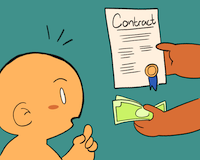
One of the biggest questions about making comics is: what roads are available to make money off of making comics? One direction that many creators go is commissions or contract work. Contract work is specifically entering into some kind of agreement, where someone is paying you for your comic-related skills. It can be a simple illustration commission that you draw for someone in a day, or it can be something long-term that spans years and years. So how do you get that kind of work, what does it look like, and what are the pros and cons around it? We’re going to jump into it now!
Listen to this episode here:
Listen to this episode on YouTube:
In this Episode:
- What types of commissions or contract work have you gotten into over the years? Tell us about it!
- What’s the difference between contract work and other ways that creators make money? What do you have to keep in mind when working for a client that is different than a project you’re doing for yourself?
- What is your advice to someone who is looking into getting more commissions or contract work?
----
Episode Release Date: March 4, 2026
Episode Credits:
Christina Major (@delphina2k) - she/her, sombulus.com
Kristen Lee (Krispy) - she/they, https://ghostjunksickness.com https://www.lunarblight.com
Bob Appavu - any, https://intothesmokecomic.com https://www.demonoftheunderground.com
----
The Intro "DO IT (feat. Shia LaBeouf)", and the Outro "It's Good To See You Again!!", both by Adrianwave, have been used and modified in good faith under the Creative Commons Attribution-Share Alike 3.0 Licensed. Edits include: Fade IN/OUT, and a repeat added to the beginning of "It's Good To See You Again!!". For more information on this creative commons use, please reference https://creativecommons.org/licenses/by-sa/3.
Transcription
This transcript is auto generated by our recording software.
Krispy
Bob and Delphie, my favorites.
00:03.46
Delphina
We're going to tell everybody else you said that.
00:05.53
Krispy
Oh my god, it's being recorded!
00:07.10
Bob
Yes.
00:09.53
Delphina
Okay. Hello and welcome to Screen Tones, where we talk anything and everything webcomics. Today we're going to be talking about the various forms of commissions or contract work that webcomic creators get into. I'm Delphina, I use she/her pronouns and I make the webcomic Sombulus.
00:28.66
Krispy
And I am Krispy. I use the pronouns she/they, and I make the webcomics Ghost Junk Sickness and Lunar Blight.
00:35.90
Bob
And I'm Bob, I use any pronouns, and I make the webcomics Into the Smoke and Demon of the Underground.
00:42.78
Delphina
Excellent. Okay. So one of the biggest questions about making comics is: what roads are available to make money off of making comics? And it's a hard one to address because that answer is changing all the time. But one direction that many creators go is commissions or contract work. Contract work is specifically entering into some kind of agreement where someone is paying you for your comic related skills.
01:11.05
Delphina
It can be a simple illustration commission that you draw for somebody in a day, or it can be something long term that spans years and years. So how do you get to that kind of work? What does it look like? And what are the pros and cons around it? We're going to jump into it now. So I'm going to throw it to you, Krispy. What kinds of commissions or contract work have you gotten into over the years? Tell us about it.
01:35.60
Krispy
It's interesting because I do not. So normally, you'll see this a lot in social media circles where an artist you follow is like commissions open, they have this nice little graphic. The typical experience is that they do illustration commissions, and you'll see bust and torso and then full body and then price, price, price. And it has a variant of that. And then usually in their social media handle, they'll say commissions open if they're a commission artist. So when we talk about that, it's someone specifically getting money from their clients who request XYZ: usually original characters, fan art, and so on and so forth. In my case, my commissions are technically always open, but I never advertise them.
02:28.79
Krispy
I don't want to be on the commission hustle, is what I'm trying to avoid. And a lot of people who pay me for certain kinds of work, it's very in the know, I guess. Like people will ask, are your commissions open? And that's usually the first foot in the door with that. I don't like to advertise them openly because like I said, like I have a lot to do and it's fun to do things on the side that I don't have to kind of… not to say jump the gun with, but don't feel obligated to always take a clientele for making money, which is a massive thing.
03:11.42
Krispy
Especially when people are commission artists and that is their main income. Not that they have to take everything that they say, but you know, there is a little bit of that pressure to be like, okay, you can't get too picky if this is something that you're kind of relying on for income. My case however is... I don’t want to say unique, I feel like there's a lot of artists that do that, but I never advertise that my commissions are open because, you know, I just like being a little bit more loosey-goosey. And the kind of stuff that I usually get is a lot of… there's character stuff but actually a lot of it is development kinda stuff for people's web comics. I get a lot of like, logo commissions. And I've done some on contract too with, you know, I made a logo for a manga called God's Bane that is getting printed traditionally by a publisher. So I actually had to also sell the rights for them to use that on top of creating it.
04:15.93
Krispy
So that was pretty neat. When you're working with that stuff, it's always good to work with actual contracts in mind. Just having a paper trail and paperwork involved when your art is going to be kind of bought in that way is a really good idea. So I like to have my little work documents all squared away, especially for, you know, taxes and all that stuff. Just keeping yourself organized. The other stuff that I do is like I said, development for comics. So I do a lot of interior kind of background design for people who are building up their web comics and their world, their lore and whatnot. It's something that I really enjoy. And yeah! It's time consuming in all the best ways. And yeah, that's kind of like in the know. I also do not advertise that stuff. I don't even think I've shared any of the stuff that I've done, like the interior designs for other people's comics on any kind of social. So a lot of that stuff comes from being like in the know, connections and whatnot. So I feel like I'm a little...
05:29.18
Krispy
Again, I don't want to say unique, but it's just interesting in the position that I am in where I still get commissions, but they're like, you know, whisper. Yes.
05:39.30
Delphina
Oh my gosh. I mean, but that's, that's kind of what happened before social media existed. That like networking somebody that, you know, it's like, oh, I know somebody who does this sort of thing.
05:47.54
Krispy
Yes.
05:50.97
Delphina
So, so you reach out to them directly instead of just kind of having to do a little tap dance on blue sky or whatever the social media is of the day.
06:01.29
Delphina
So I, would say you're doing the more traditional route versus the modern way, but I'm old. That's just me.
06:10.35
Krispy
I think that makes sense though. Cause you know, someone sees a skill or an asset that they want and they're like: “Hmm, I see that this artist is proficient or whatever in this skill. I want more of it.” And I think that that is so important when we talk about this episode today, I will get into it later, about understanding the skill sets that you have, and really focusing on and making that work for clients that you have, as opposed to forcing yourself into something you do not like to do. Because I see that a lot with artists who take commissions, and they hate what they're drawing, and you can see it in the art.
06:49.73
Delphina
Yeah, we're definitely going to get into that. But now I'm going to throw it to Bob, too, because I want to know Bob's experience. What types of commissions or contract work have you gotten into over the years?
07:01.57
Bob
Oh, there's been so many years. Talking about being old. I mean, yeah, like… I started out, my first job out of college was an in-house project management and art direction job. And then after I, you know I did that job for a few years, and then I left it and ended up doing freelance for that same company while also kind of expanding my freelance client base for the next… over a decade, haha.
07:33.69
Bob
And that work, it was like very corporate, a lot of IP, so a lot of licensed work. So I was working with things like Disney and Warner Brothers and Thomas Kinkade and like, Precious Moments, like all of these brands. So not everything I did was brands, but a lot of it was. So it was very corporate, very impersonal. It was work for hire. So, you know, I got to charge a lot more for it, but it meant I didn't keep any of the rights to the work I was doing. Obviously I wouldn't, I mean, like I can't keep the rights to like Mickey Mouse. So like, reasonable contract for the type of work I was doing.
08:14.17
Bob
And also a lot of NDAs. So like I couldn't share a lot of the work I was doing publicly. In terms of… Well, before I switch tracks, the nice thing about that type of work is that it's very good at funding the passion project. Like I'm fortunate in that I do make money from my webcomic work and from all my comic work, but it is just not comparable to like, you know… Design type of art, corporate design work. That's kind of where more of the money is and, like Krispy said, it's not something that I personally have ever found success drumming up on like blue sky or twitter or whatever. It was word, it was you know going through the system, it was recruiters at art school, it was having a friend who got hired first and that sort of thing.
09:08.89
Bob
In terms of work that's more in line with comics, I mostly don't do comic-related work on a freelance basis. There were a few exceptions, like I did some comic book design for a few years. And I also do have a literary agent who I, you know, I signed with her for a graphic novel idea. And she also reps me for illustration and for comic work. I was fortunate in that the graphic novel I pitched sold fairly quickly.
09:44.42
Bob
So I didn't actually get a chance to, like, take on any big comic jobs, but it's not really something that I want to do. I personally don't want to do contract comic work unless it's like coloring, or something else that doesn't require quite as much of my creative energy, just because I find that hard to juggle with my personal projects. But that is an option that's out there. You know, people get hired to draw comics, or to color comics or lettering or inking, background design as Krispy mentioned, editing. There's a ton of things you could do in comics. The one thing that I too really don't do is like your traditional internet-based commissions where you're just kind of putting up your commission sheets and getting clients that way.
10:37.56
Bob
For me, it's just... I already have the low paying work, and that's the comics. So I got to, you know, focus the freelance on the the stuff that carries me through a little more. But that's basically my background, in terms of how I fund the stuff that doesn't make quite as much.
11:00.89
Krispy
I think it's always funny because I have a VGen. So VGen is a platform for taking commissions. It's actually really, really neat. They can do it where you can kind of like fill out your menu for clients to take. It's very intuitive. It has a lot of examples when people want to take a certain style, they can leaf through that stuff. They have a progress meter. There's a bunch of stuff that you can customize so that the client and artist interaction is just very smooth. It's invite only. I got a link for it and I set it up… and it has been inactive, ever since I have set it up! For over… I think it’s almost two years.
11:47.80
Krispy
Oh, oh that's bad. Oh, god.
11:47.83
Delphina
Oh my gosh.
11:49.20
Krispy
Anyway! So I guess almost two years now, because I keep thinking about that. I keep thinking like exactly you said, Bob, with the low paying work with the passion projects that we have.
12:03.34
Krispy
I want to save my energy for that. I mean, it is definitely why I have the day job to do everything else. But that is still taking my free time and energy, to do something else.
12:16.15
Krispy
It’s not that I don't want to draw for people. I always participate in art fight every year, which is one of my favorite things.
12:26.27
Bob
Oh yeah, that's fun.
12:43.78
Krispy
But yeah. It’s fun to draw for people and make their day, but, I don't know, it's it's hard when there's an expectation coming. And I know that the money that you get from that just isn't going to be as… sustainable, I'll use the word sustainable, than working for a company.
12:49.69
Delphina
Yeah, absolutely. My experience is pretty similar. I went to college for graphic design and my internship out of college was doing web design, which I had a little bit of experience with, so I got more experience. I moved on to other graphic design and I started up my comic on the side as kind of my me project. This is my spare time project.
13:25.11
Delphina
And I think it's a very similar experience to you both where like I have that passion project, I want to kind of keep that separate from like the paying work. So I've always kind of sought out, even when I was doing freelance, something that was different than that entirely. So I kind of evolved into corporate PowerPoint presentations. I take things that CEOs have and make them look like they weren't scribbled on the back of a napkin or whatever.
13:50.74
Delphina
So there is some creativity in that, but it's very much, you know, it pays the bills and I'm never going to be doing… Well, I'm not going to say never. Sometimes like I get to some weird clients and they're like, yeah, we want something creative. I'm like, hell yeah.
14:10.33
Delphina
Yeah, but I think when I was doing more full-time freelance, I did pick up a couple of jobs doing logo design for webcomic artists. And I do like doing it. I have done logos for other places, for companies and for organizations. And there's something special to me about logos for webcomic artists specifically because we're all visual. I can like, read your comic. I can see the art. I can get the vibes…
14:48.48
Delphina
Versus like a company that doesn't exist yet, and they're throwing things at me like: well, we're synergistic, and we're the technological wave of the future. And I'm like, I have no idea what any of those buzzwords mean, but I can read this comic and I can see, oh, OK, it's romance. It's got this kind of magic element.
15:05.03
Delphina
And so I have done a couple of logos for various creators over the years, and i've done print layout work when people are looking to print their books and stuff and they don't have experience with Affinity or InDesign or whatever. That was something that I learned to do in school. So that was something that was very easy for me to pick up in various contexts to help people out. And those are nice little projects because they don't take too long. They're not taking too much time away from my passion project. And i do want to say that I’ve hired people on a contract basis before to help out when I’ve been a little busy and so people have helped me out with flatting, with colors, with my website. And these are all things that I know how to do but I just didn't have the time that month or whatever, and I had more money than time. So like, okay, fine.
16:07.35
Delphina
I'll help out my community. I'll pass a few dollars around. Somebody can use that money, and then I can get my thing done that I want to get done. So that's been a pretty positive experience for me. But similarly, I don't put my work out there. I don't have any little commission sheets, it's all kind of been word of mouth. And I do feel like that helps filter out some of the really random stuff or the more demanding clients, because you kind of know them, or somebody along the line is at least vouching for them enough to pass your information back and forth. And that's where I feel like a lot of problems come in, when you have this kind of open call, is that you’re like, who's vetting this person? Who are they? We don't know.
17:00.54
Bob
Yeah, that's a really good point. And like, I don't personally take the position that people shouldn't do commissions. She says, like we by chance have three people who don't do the whole commission sheets and Internet commissions thing. That doesn't mean that it's something you shouldn't do. But there is a particular challenge in trying to drum up work in the space where everyone is trying to drum up work. It's just really difficult. And it's very, you know, that's the way to get the prices driven down, you know, basement level pricing. And the people with like the 30,000, 50,000 followers, you know, it's just a different competitive environment.
17:42.94
Bob
And a lot of the a lot of people who need artists… just aren't actually online. Like a lot of those, you know, local businesses and stuff like that, you just don't find them in the same spaces as you find the people doing the commission game. So it's, you know, it's just also a matter of knowing where to find the type of client that you want.
18:02.34
Krispy
I feel like it's very akin to the going to a convention and passing around the same $5 sometimes. Like when you have those vibes.
18:08.73
Bob
Yeah, I know that feeling. Yeah. Yep. yep
18:13.05
Krispy
And it's interesting because back in the day, I used to do the commission sheets and getting clients and stuff like that. Because like, you know, when you’ve got your first kind of foray into the internets and you had access to something that could help you get some monies. It was fun to do.
18:36.70
Krispy
And, you know, I had returning clients and whatnot, but I left those days behind… I think when I started a comic. More professionally, I guess more professionally starting a comic.
18:47.19
Bob
That makes a lot of sense.
18:49.43
Delphina
Yeah, it's just interesting because it's like, comics are so much work, and they are like week after week after week. Like you're not going to get a break.
19:01.83
Delphina
So if you want to take commissions, you have to make a break in your comics. So in a lot of aspects, I do feel like they're mutually exclusive things. But some people manage it, man. And they are superheroes to me because that is not a skill I possess for sure. It's just really different trying to, like, even between like contract work and and other things where like I am making money off of my comic, but it's not doing what other people are telling me to do. It's not like a buy request thing. It's just my Patreon or selling things online or selling things at conventions that I wanted to make, that happened to be something that people want to pay me for. That's kind of a difference there.
19:23.06
Delphina
And I did want to throw that out. Like, what is the difference between those things? We've talked a little bit about it and like, what you have to keep in mind when working for a client that's different than working on a project yourself. But what other things do you think contribute to that? I'm going to throw it to Krispy.
20:10.81
Krispy
So it's interesting because when you're doing contract work, my thing is, I'm so anal for this. But when money is involved, it's like, it's go time. It's professional mode. You're required to do something for someone who has requested this of you, they sought you out or you sought them out or so on and so forth, right? There is a mutual agreement that something will be delivered at X time.
20:39.51
Krispy
And so I think that, you know, you really got to be professional about the entire exchange. You've got to be very transparent. And not that that doesn't come into your own work, but when it comes to something that you're doing yourself… Yeah, I think it's really great to set timelines and expectations. But when you have someone else in that equation, you're going to have to just make a little bit more kind of firm deadlines and requirements for yourself.
21:15.58
Krispy
Whereas… Say, you're doing your comic and you're like, well, I'm feeling a little poop today, going to miss this update, see y'all later… You can put that on social media and people are like, oh, feel better, Jessica. And, you know, so on and so forth. With a client, it is different. They can understand any kind of things that happen, I mean, life does happen, but the expectations are firmer. And you can't just be like, oh, I just wasn't feeling it today. You have taken someone's money and it can't just be, I wasn't feeling it today. And, unfortunately, I see a lot of younger artists kind of fall into this, where… I understand cause I was there, you know, you can do an art, and people like your art, which means, I could make money with art. And that's cool and exciting! But a lot of times they realize that they don't actually want to draw what they're being paid to draw. And that's their kind of first experience being like, ohhh, this is a different skill set.
22:24.54
Krispy
And I kind of am in the, I’m in the side in which: just because you can draw, you can illustrate, you can animate, whatever, does not mean that you're a fit for making or doing commissions or contract work. And I don't think that that's something that's like, a fault, or bad. But, you know, I see a lot of people who are into webcomics–and webcomics being what they are, is very passion driven– and kind of making up your own schedule, no matter what the friggin apps wish to make you update with, and their schedules. But yeah, you're on your own schedule. And then, you know, when you kind of enter that agreement with, you know, someone that is expecting you to do these things? Yeah, the expectations are going to change. And you might struggle if you're not someone who can kind of detach yourself from that.
23:23.77
Krispy
And it's interesting because I know a bunch of people who are like, I hate drawing for other people. They could draw awesome for themselves, but I know people who do not like drawing for people, other people, they despise the action of doing so. Not because it's like, ew, your OC sucks or whatever, but it's because… they don't. They just don't want to. They love their own stuff so much and that's what makes them draw their own creativity, their own kind of drive. And that's not a bad thing. That is not a bad thing. I don't think that if you're in that position, if you were in that mindset, please don't force yourself to be in a position that you hate, doing this, because you actually don't like drawing other people's ideas and stuff like that. I don't think that's a good mix. And I've seen people force themselves. It's very miserable to also share the room with them when they're complaining the whole time. So just just kind of keep that separation for your own sanity, I think.
24:50.01
Delphina
Yeah, I definitely agree. And I feel like maybe there's like a FOMO aspect to it where like, oh, everybody's taking commissions like that, that's the thing you do when you're an artist, and I should do it. And sometimes I like drawing fanart of other things. But you're right that it is a different skill set. It is a different beast.
25:11.03
Delphina
And just because you can draw a thing when you're feeling inspired to do it, that doesn't necessarily translate to a sustainable work practice either. So I think that's really important to keep in mind when you're doing this stuff. I'm going to go ahead and throw it to Bob. Like, what are the differences that you see between contract work and other ways of keeping– or you know, trying to make a living– or what do you have to keep in mind, when working for a client, that you don't have to keep in mind so much for yourself?
25:48.47
Bob
Yeah, well, I mean, first of all, I just completely agree with everything Krispy said. The element of... Well, first, like I just want to backtrack to the last thing you mentioned, which is you know the idea of some people just not enjoying the particular act of drawing other people's stuff. And I'll be honest, that's like, yeah I could be sold on drawing some specific stories and specific characters, but for the most part, the reason most of my freelance is in the realm of design is because illustration is such a difficult and labor intensive thing for me. I just, my mind doesn't really mesh as well with drawing other people's characters. Like I didn't grow up doing fan art or that sort of thing.
26:24.86
Bob
So for some, like even working with other indie creators is very different from working with like Disney. There's no soul in working with Disney. So you don't actually have to, like, you know… The relationship to the art is different. And so when I choose to work with another indie creator, I have to have the soul because I have to do a good job. And if I can't muster that up, then I don't take the job. So doing more design work makes that a little bit easier.
27:11.83
Bob
I also want to agree on everything in terms of professionalism. It is a different skill set. It's a lot of interpersonal skills. It's a lot of being organized, being on deadline, being clear in your communication, making sure your client knows what to expect from you and sticking to what you promise and being very clear and transparent if anything does go wrong.
27:36.38
Bob
On the flip side, yeah I sometimes find the mindset with freelance work to be a little bit freeing and a little a little liberating because, you know, we talk about the relationship with the work and I am a tortured artist. You know, for me, it's actually relatively easy to please a client because all you have to do is make the client happy. You know, with webcomics, you are the client because no one else has power over you.
28:11.06
Bob
You decide what success means. You decide whether you'll continue. And you might be an easy client and you might be a difficult client. And I am a more difficult client than any actual client I've ever had. So that means I have a lot of mental strife over my webcomic when I don't have that same type of mental strife over my client work. It's all very clean and very professional and very they tell me what to do and I do it, and they give me revisions and it doesn't scar me or hurt me to take those revisions because it's not the same connection to the work.
28:46.30
Bob
But, you know, I'm the tormented artist in the webcomics world and I'm just the level headed professional in freelance. And so I really like to use freelance as a mental break from those moments of self-doubt and just, the difficulty of trying to please myself as the client of my own webcomic. So freelance has actually helped me to balance my mind and just make me feel like I was doing good work, even during times when maybe my webcomic readership wasn't as vocal or when I was just feeling a lot of self-doubt about the quality of my work. It's actually kind of nice to have a freelance client just be like, hey, this looks great. And it's like, wow, that was so easy.
29:26.51
Bob
And obviously, a lot of that… you can have some pretty difficult clients, and I've been very fortunate. Like the best thing about freelance is when you get good repeat clients and you know what to expect of each other. And it just becomes more and more comfortable because you know each other's vibe, there's trust there. And that's always the goal, is just do a good enough job that you get those repeat clients.
30:01.18
Bob
And one last thing, and I'll just speak on it briefly because I kind of feel like maybe other people have some thoughts on this too. You know, commissions and contract work, it's a business. You should get paid for every single thing you do. Comics are a passion project and you can do it for free if you want. If you're doing work for someone else, you really should always get paid for it.
30:32.44
Bob
The conditions on which you're paid and that sort of thing, you know, it depends on the type of job, it depends on what you're doing. It's so variable. But one thing I would recommend is: always charge for revisions, because it's just… Just trust me, always charge for revisions.
30:44.70
Krispy
Yes. Yes. Oh my god.
30:48.76
Bob
And make sure that you're charging more when there are more revisions. It should scale because if you don't, some people will take advantage of just the endless stream of nit picky, tiny little revisions. And that's what really wears you down. So yeah I'll close out on that.
31:08.89
Delphina
Oh, gosh, it's so true. I've been in that, like, we're on revision 50 or something like that. And I'm just like, really? Really? We can't be done with this? Okay. Okay, we'll make it red. That's fine. We'll just make it red again. Okay.
31:24.28
Bob
And then back to the original color.
31:26.70
Delphina
Yeah. Can we see them both though? Like, you can tell it's like a too many cooks in the kitchen sort of situation. Everybody's going back and forth, somebody important finally said something.
31:31.84
Bob
Yeah.
31:33.14
Delphina
And yeah, that kind of thing can be frustrating, but I do agree that it is a nice mental break because a lot of times when you're doing some of this more corporate work, you're making the easiest revisions in the world. You're just changing the font from Comic Sans to Arial and, and making sure everything's, like, left aligned properly. And they come back to you and say, Oh my gosh, you saved my life.
32:03.79
Delphina
I'm like, you're welcome. It's just a nice, easy win, and it can be a very gratifying thing when people are like, I love working with you so much, you are so professional, you are so easy to work with and you really helped my idea to come to life, I want to give you more work, I'm going to tell everybody about you. And like, that's kind of how you get a freelance business or a commission-based business going, is getting these people who are really happy to work with you.
32:34.26
Delphina
And I will agree again that they don't usually come from like blue sky or the other places that I see artists hammering their stuff all the time. They've come from board gaming groups for me, they come from ex-co-workers for me, they've come from just other people who talk about me to their friends. And so you really do have to get into this habit of living your life and going to other non-artist spaces where there is an art need, because otherwise you are competing with a bunch of people who are just very professional and have the better SEO and are more findable on these networks.
33:27.93
Delphina
But there's still a lot of work to be had if you're open to working around in other spaces, so I would absolutely encourage that for sure. And just make sure that you do good work and you're good to work with, because that's going to make all the difference. And yeah, I'm just going down the list like: You do need to keep your deadlines. Being proactive about communication, because that's one of the things that…when I'm hiring people to help me out, even for little things, I really appreciate it when they're the ones reaching out to me and saying, “Hey, here's where I am, here's what I'm doing, I expect this to be done by Wednesday.” And like, great, now I have an expectation as opposed to me getting to Wednesday, I'm busy, and I'm not looking at my email the entire time. And I hired you because I'm too busy to do this work. So, like, I don't want to be chasing you. I don't want to be trying to hunt you down and figure out, hey, where's that thing?
35:16.06
Delphina
And I think also there can be this habit that people get into where they're a little too casual, where they're saying, “oh, yeah, well, you know I had a busy weekend, and I went to the zoo, and I did different things.” And like, that's nice, and maybe we're friends, and maybe I do want to hear about that. But as a client, the first thing I want to hear is, what's the status of my stuff? Like what's what's going on? And there's room to be friendly within that, but also that professionalism of being proactive and kind of keeping your client informed, and not adding more mental load to their process will always help.
35:53.08
Delphina
But yeah, I also am in a situation where if I don't want to communicate with people, I'm the only person working on my comics, so I can kind of do whatever I want. I'm not very much of a perfectionist, I think I'm a pretty easy client for myself, so that's nice. And I just do whatever I want to do on the comic side. But it's true that like, I'm not ever going to get as much money as I am with with corporate work from that. I'm never going to.
36:25.46
Delphina
It takes a lot of time, and energy, and networking to get yourself to a place where freelance is a full-time sustainable thing for you, and that's a thing that I wish more creators would understand. I feel like there is this way of seeing like all the success stories, and all the people who do cool mail clubs and big commission sorts of things, and make the big bucks. But they've worked so hard and you don't see necessarily where they started.
36:47.16
Delphina
And I think climbing up to that area, like, I don't know. Sometimes I feel like you'll know when you can do it, but if you don't know if you can do it yet, the answer is probably no.
37:03.19
Delphina
And you do need to work a little bit more on your networking and trying to get steady clients before you make a go out of making that your full-time gig. Yeah. So that's just my thoughts on it.
37:24.12
Delphina
And yeah, I'm just going to ask for some other advice. What is your advice to someone who's looking to get into more commissions or contract work? Throw it to you, Krispy.
37:25.69
Krispy
Whoa! I caught it. Well, I think one of my biggest pieces of advice is, know your limits and what you could do. Always start small when you're wanting to do stuff like that. So yes, you do have to draw baby Jonas for your aunt Mary, and see how you feel about that. If it was miserable, that might be an indication that maybe you just don't like drawing babies. But! That was still like a nice little door for that.
37:54.91
Krispy
It’s funny, I'm thinking back to The Olde Days. One of my first jobs ever was actually client work. I did illustrations for a textbook, many years ago, and it was intense in all the fun ways. It was actually very chill considering I was young, I was only 17 when that was a thing. And it was daunting in the fact that, like, there was a big amount of money that was happening and there was expectations. But I had the advantage of knowing the client, you know, through other connections.
38:31.32
Krispy
And like it was said in this episode, connections is a really, really big thing. So I think another piece of advice, as far as connections go and and kind of gauging, is to talk to other commission artists, if you want to get into this, and see what their workload is..
38:43.98
Krispy
Because like Bob said, it's kind of funny that the three of us aren't into the typical commission artwork kind of hustle that you see on social media in this. But there are people who still make it happen and they're very professional about it. Very on time, very prompt with their work that they do. So try to seek them out and chat them up! See if they want to talk about their experiences and whatnot. I don't think the first question that you ask them is, how do I get to where you are? Because that is just not going to be an answer that is cut and dry. Because your art is different from their art and so on and so forth. They have clients that will return. They have expectations and this kind of world that they have built to get to where they are. And as always, when it comes to art in this field, luck does play a lot, but paying forward has a really, really big impact in these creative communities. And that is just as simple as telling other people that a commission that you bought perhaps was incredible. The person that you worked with was amazing. And just being, again, professional can lead to more opportunities and also feed people.
40:09.33
Krispy
The personal projects that you work with because having that as one of my first kind of jobs really taught me to do deadlines, really taught me to be professional with my own work, and this is why I have as much as I have done with web comics, is because i do treat myself as like my own client sometimes. Where I'm just like, okay you have X amount of time before this, and if we're going over that we're going have to talk to the boss, which is me again, but you know.
40:38.71
Delphina
Harsh boss.
40:39.61
Krispy
So yeah, definitely. I want to say, talk to other commission artists, and also as someone who buys commissions or works with other people, pay it forward. I think that's so important, especially in the web comics community. Just really talk up your peers who have done a good job, or feel like you know would do well in another thing. Cause that's also how I got jobs is that someone said, “Hey, Krispy does this one thing. Have you tried contacting them? Cause I like the work that they do with this”. And yeah! That's how a connection was made.
41:20.47
Delphina
Absolutely. Like, I feel like there's just so much to be said for word of mouth, because you can tell people that you're awesome all you want. But when you hear from somebody else, that kind of also speaks to what the back end looks like.
41:34.91
Delphina
Like, even though you like somebody's end product, you don't necessarily know what it's going to be like to work with them. So taking that away and being able to say yes, every part of this process was great, is just golden. It's beautiful, and I think we need more of that for sure.
41:35.04
Krispy
Mm-hmm.
41:53.25
Delphina
I'm going throw it to you, Bob. Do you have any other advice for someone who's looking into getting into more commissions or contract work? They're not really sure where to start or where to go.
42:06.26
Bob
Yeah, I mean, first of all, again, just gonna mention that the paying it forward element is super important. Anytime an opportunity comes my way that I don't think I'm right for, I always make it my first priority to think about, well, who do I know who would be good for this? And who can I recommend for this?
42:19.51
Bob
Because, you know, I don't have a ton. Like, I have not yet hired other people from the community– I probably will soon, I'm going have some major flatting work I need done. But so far, I haven't had the opportunity to do that. But I do really love kind of playing matchmaker with people, with other, you know, clients and potential artists. And it's just nice when you can set up someone else to have a good outcome that way.
42:58.46
Bob
Other advice I would give... Pick up a copy of the Graphic Artists Guild's Pricing and Ethical Guidelines. It's a book, I think they also have it online. I'm not like being paid to recommend them or anything like that, it's just, it lists industry standard pricing for common freelance work.
43:23.32
Bob
This is more for if you're doing like...more traditional freelance as opposed to your internet-based commissions. But I actually think that it's good to read, even if you are looking at more of the internet commissions, just so you know what else is out there. And it lists, like, all the different industries and types of work. And it could even give you some ideas on where you might be able to branch off into.
43:48.73
Bob
It gives you the most common price ranges, and also has, like, sample contracts and advice on what you should be including in your contract and what best practices are for when you are working with the client.
44:02.10
Bob
So I definitely recommend doing that. Be in artist communities, talk to other people about their art, about their past jobs. You know, you're gonna come across people who have tons of experience, tons more experience than you. Like, I've been at this forever and I still come across people with tons more experience than me that I can learn from. And it's great to be able to pick up advice from those people.
44:34.10
Bob
And I would say finally, when you're new to contract work, I personally think it's okay to price fairly low if you are still not really working at a professional level. Like, if you're doing it kind of more on hobbyist terms, but taking a little bit of, you know, pay on the side, that's fine.
44:58.39
Bob
But if you're doing it at a professional level, I would say… Again, look at what the typical prices are, and don't go below that. Because number one, you'd be undercutting other creators and you don't want to do that, it drives prices down for everyone, it undervalues everyone's work. But also there is a psychological thing that happens where, when you charge really low, a lot of times your client sees less value in the work you do and they treat you with less respect. They're more likely to try to take advantage of you. I don't know exactly why this happens, but I've just always found that clients who see the value in your work and are willing to pay for quality, they generally will treat you better. So the first step to getting clients to treat you better, is treat yourself better and make sure you're getting paid what your work is worth.
45:51.86
Bob
Consider how many hours it's going to take you to get the job done, and that should be the baseline for like the minimum you charge. And then you can work up from there depending on what rights they want to the work, you know, if they want all-rights, or work for hire contract, then you charge a lot more for that type of work. If they want to make merchandise, you charge more for that type of work. But your baseline should always be based on how much effort and how much time it's actually going to take you. What expenses are involved? Like, do you have to buy fonts? Do you have to buy equipment or anything like that? Do you have to do research into period clothing, or do you have to look at corporate style guides? Those are all things that you charge extra for because it's included in your work.
46:41.66
Bob
The time that's spent working is not just your pen to paper time. It's also research. It's also just everything that's involved in doing the job. So make sure that you are taking all of that into account and charging for it because if you don't, you'll get underpaid, you'll burn out and you won't be able to keep doing it, and your clients won't give you the respect that you're due. So that's what I say, take good care of yourself and your clients.
47:11.42
Delphina
Absolutely. And aside from just, like, the psychological aspect of taking less money and kind of getting less respect and stuff… there's also, if you live in America, self-employment taxes, and, like…
47:25.21
Bob
Oh yeah, oh yeah.
47:26.01
Delphina
That can really bite you in the butt. Because it's like, 30% of your money is going to go to the government. So you do have to keep an eye on that. You have to save some money aside for taxes. Please talk to a tax professional because we're not tax professionals. But I just know that that has stung me in the butt so much because I think I have a lot more money than I actually do. And yeah, the answer is just charge a little bit more. And it's going to seem weird, I think, if you're coming from a place where you haven't hired artists or you don’t, like, you're not working with a– especially from corporate, because you're charging like $100 an hour and you're just like, “whoa, that's $100. That's a big number. That's three digits.” But like, once everything kind of gets sorted out, it's not actually a livable wage sometimes.
48:25.53
Delphina
So just keeping an eye on that for practical reasons, and having financial consulting where that makes sense is a good idea. I will say that as far as continuing to get work or even getting work for the first time, keeping your portfolio updated, making sure that it has the work that you want to be doing and not just everything under the sun, because I see that a lot too, when people are looking to be like, I want to be hired for anything. So I'm going to put absolutely everything on my website and… People can't tell what you specialize in necessarily, people can't tell what you want to be doing, necessarily.
49:11.96
Delphina
And so being able to be focused or even like, I don't know. I don't actually keep a portfolio so much. I just, when somebody asks me about stuff, I just have a PDF of like, “Oh yeah, here's the logos I've done. Here's the other things.” But any kind of thing that serves that purpose where you can point to one place and a client can see exactly what you can do for them is going to sell you much better on getting that job. So that’s one thing.
49:37.05
Delphina
And then, just following up with potential repeat customers. Once you've gotten those clients who are super happy to work with you and you liked working with them, you would absolutely take any other future projects. I always respond well to like, you know, just somebody says, “Hey, you know, happy new year, whatever. Just want to say, I really liked working with you. If you have any other projects for me right now, let me know because I'm open for more work”.
50:20.98
Delphina
And, you know, it can just be as casual as that, but all of a sudden now I'll remember that, oh, yeah, I do like working with this person. They did a really good job. And I wasn't thinking about it before, but now I'm thinking about all the things that I do need help with. So that's a good way to get business out of me anyway. And it's something that I've employed for other people, too, when I'm reaching out about like, hey, what's going on? Because people get busy, so just remind them that you're there. Don't be a pest about it necessarily, talk like a human. Don't send them like, I'm going to put you on my newsletter thingy and whatever. But just keep those networks open and active when you do want more work, when you're ready for more work, or just show them what you've been working on recently.
51:12.05
Delphina
Unfortunately, I think LinkedIn is sometimes good for this. So you can use that if you want to get into the more corporate stuff. But yeah! There's just lots of areas where it makes sense to keep telling people what you're doing, and make it clear that you're open and available for more work.
51:36.01
Delphina
All right! So yeah, that's about what we got for that. And we wish you all very much luck if you decide to go on this commission or art contract journey. But yeah, we'll wrap it up there. I have been Delphina and you can find my webcomic at Sombulus.com.
51:57.20
Krispy
And I'm Krispy. You can find my webcomics at ghostjunksickness.com and lunarblight.com.
52:04.15
Bob
And I've been Bob, and you can find my webcomics at intothesmokecomic.com and demonoftheunderground.com.
52:12.17
Krispy
I want to get more commissions. I love buying commissions.
52:15.89
Bob
We should just all hire each other right now. Just now.
52:18.87
Krispy
Ohhhhhh!
52:15.67
Delphina
What, do you just trade the same $5 around?
52:21.18
Bob
Yes. Pass it around in a circle. Yes.
52:24.57
Delphina
Beautiful. I love this.
52:26.31
Krispy
What would we do for a $5 commission each? That would be fun.
52:29.32
Bob
Smiley face.
52:31.51
Krispy
I would do a turkey hand.
52:33.35
Bob
Ooh, I could do a singular Canada goose.
52:38.68
Delphina
Oh, that's getting too fancy for me. Okay. We're going to stop this.
52:40.88
Bob
That's fair. Fair, fair.